
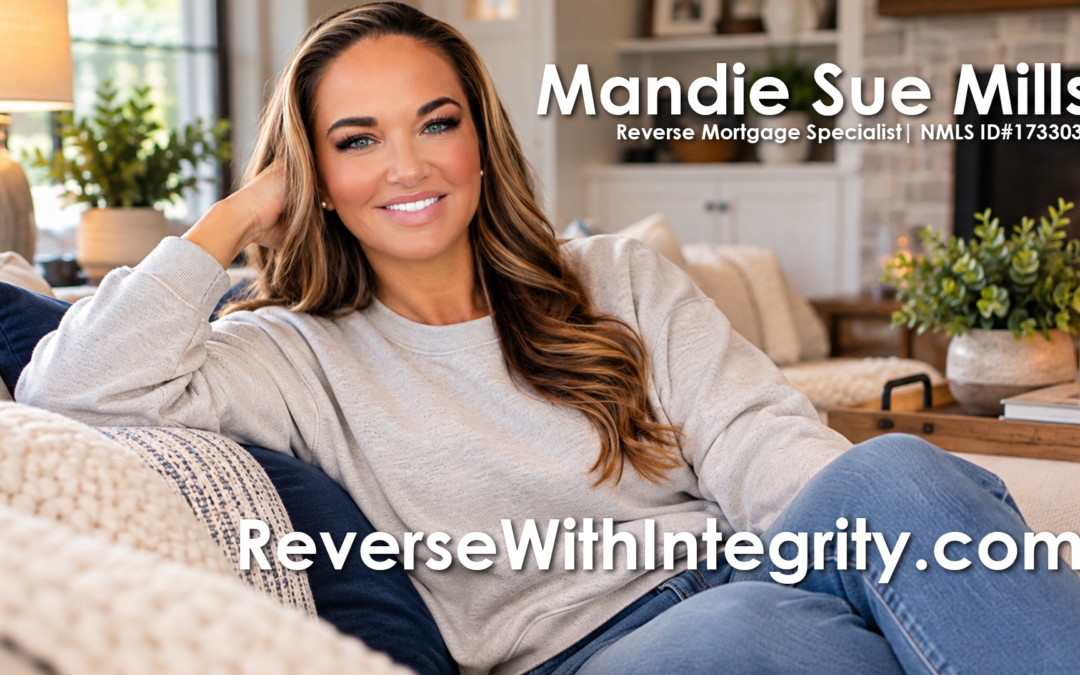
These Are Love Moves: My Retirement Blueprint for My Sons
Usually, I share someone else’s retirement story. This time, I’m sharing the one I am still writing.
Mine.
I’m about to turn 50. Under today’s rules, that puts me about 12 years away from meeting the minimum age requirement for a Home Equity Conversion Mortgage, or HECM.
And yes, a HECM is already part of my retirement planning.
I have spent years helping people consider how their homes might support their next chapter. It would be strange if I never asked those same questions about my own.
But my reasons are deeply personal. They involve my independence, my little beach bungalow, and two grown sons I will never stop wanting to protect.
The numbers deserve an honest conversation
As a single woman, I know my VA military income and anticipated Social Security benefits alone are unlikely to sustain the lifestyle I enjoy today.
I have a retirement portfolio I’ve worked hard to build. I intend to use it thoughtfully. Withdrawals have different tax consequences depending on the account, and taking too much too quickly could leave less for the years ahead. Under current rules, the usual early-withdrawal penalty generally stops applying after age 59½, but taxes and the pace of withdrawals still matter.
I’ve received those Social Security estimates in the mail. They give me a starting point, but they cannot tell me what groceries, insurance, healthcare, or everyday life will cost in 12 years.
I wonder about future benefits and whether the rules will change. I don’t know those answers, and I’m not building my plan around a prediction that Social Security will disappear.
I am building it around the possibility that my needs will change.
Think about how different life was 12 years ago. I fully expect the next 12 years to bring a few surprises of their own.
Where my home fits into the plan
I love my beach bungalow. It is a short walk to the ocean, and I take pride in caring for it.
My expectation is that, by the time I reach 62, my remaining housing debt will be a relatively small HELOC balance from improvements I’ve made over the years. My HELOC has a 10-year draw period; after that, access to new draws ends even though repayment obligations remain.
My intention is to use a HECM to pay off whatever eligible balance remains, assuming I qualify and the proceeds are sufficient.
That would replace the required HELOC payment with a loan that does not require monthly principal-and-interest payments while I meet its terms.
I would still budget for property taxes, insurance, maintenance, and any applicable property charges. I would also need to keep the home as my principal residence.
When I say I want to be “obligation free,” I mean I want fewer required debt payments competing for my retirement income. Owning a home will always come with responsibilities.
I hope my home continues to appreciate. Its location and the care I give it make me optimistic, but appreciation is never guaranteed. My plan needs room for that uncertainty, too.
A financial buffer for the woman I will become
The HECM line of credit is the part of this plan that especially interests me.
Under current program rules, the unused credit facility grows over time, increasing the amount I can borrow later. That growth is additional borrowing capacity, not interest earned in a savings account.
Interest accrues on the outstanding loan balance, not on unused credit. Mortgage insurance and other applicable charges also matter. If I finance closing costs or use proceeds to pay off my HELOC, I will have a loan balance from the beginning, even if I leave the remaining credit untouched.
I can choose to make voluntary payments. I can also draw funds when needed, within the loan’s terms. Those draws are not taxable income because they are borrowed money.
For me, that could mean another source of funds when an expense arrives at an inconvenient time, or when I want to consider alternatives to an additional portfolio withdrawal.
There are real costs to this strategy. Interest and mortgage insurance can accumulate, and borrowing against my home can reduce the equity left later. Before moving forward, I’ll compare those costs with the flexibility I expect to gain.
My goal is to have choices.
What if I’m 80 and need help?
What if I need someone to come into my home a few days a week?
What if a medical condition creates out-of-pocket expenses that stretch my monthly budget?
What if I live much longer than I expected?
A HECM credit facility could help with those expenses while I continue meeting the loan requirements. It is a finite resource, and a permanent move out of my home could trigger repayment, so it belongs alongside other planning for care.
Still, I would like my future self to have somewhere to turn.
I have lived through storms I never saw coming. I made it through with determination, support, and safeguards put in place before I knew how much I would need them.
I want to give my future self that same consideration.
I love my future self, and I cannot let her down.
I may never need this credit facility for care or a medical emergency. I would rather evaluate that option while I have time to plan than first explore it in the middle of a crisis.
My sons have already told me what matters to them
Both of my adult sons have told me they do not want my house. They have homes of their own.
They have also told me they are not counting on profiting from my death.
Those conversations matter. They allow me to plan with a clearer understanding of what my family actually wants.
I have completed estate planning, put medical directives in place, and included a revocable trust in my arrangements. My intention is to make my wishes clear and the eventual responsibilities easier to manage. I will keep reviewing those documents as life changes.
I cannot remove every task or difficult decision my sons may someday face. But I can leave instructions, organize information, and talk with them now.
When that day comes, I want them to have room to grieve, remember, laugh, and celebrate their mom.
I want them to know I was thinking of them.
Understanding what happens to the house
The HECM’s nonrecourse protection is another reason it belongs in this conversation. Under current rules, my sons and my estate’s other assets would not be responsible for a HECM shortfall beyond the home’s permitted recovery.
If the home sells for more than the loan payoff and selling costs, the remaining proceeds would pass according to my estate plan.
If the loan balance exceeds the home’s value, my sons would have options. To keep the home, heirs can generally repay the lesser of the outstanding balance or 95% of the current appraised value. An underwater sale can also satisfy the HECM under HUD’s applicable 95% rules, coordinated with the servicer.
They could instead work with the servicer to surrender the property through the appropriate process. There are deadlines and paperwork; it is not as simple as handing over keys.
Even if I live to 104, I want them to understand those protections and know whom to call.
The blueprint I want to leave
My plan will keep evolving. Twelve years is a long time, and I’ll revisit the rules, the numbers, and my needs before making a final decision.
But the purpose is already clear.
I want to enjoy the life I have worked for. I want to preserve as much independence as I reasonably can. And I want to reduce the chance that my sons will have to rearrange their own financial lives to support mine.
Needing help would never make me less worthy of their love. Planning ahead is simply one way I can care for all of us.
The blueprint I want to leave my sons includes honest conversations, clear wishes, and thoughtful decisions made before a crisis.
I hope they remember a mom who enjoyed her life, loved them fiercely, and considered their future while planning her own.
These are love moves. And I love my family.
This article reflects my personal intentions, not a completed loan or a guarantee of future eligibility. It is for educational purposes and is not individualized financial, tax, or legal advice. HECM eligibility, proceeds, costs, and terms depend on the rules and circumstances at application; HUD-approved counseling is required. Borrowers must meet occupancy, maintenance, and property-charge obligations. Interest and fees accrue, and the loan becomes due following specified events. Consult qualified financial, tax, and estate-planning professionals about your circumstances. Program rules may change before I become eligible.