
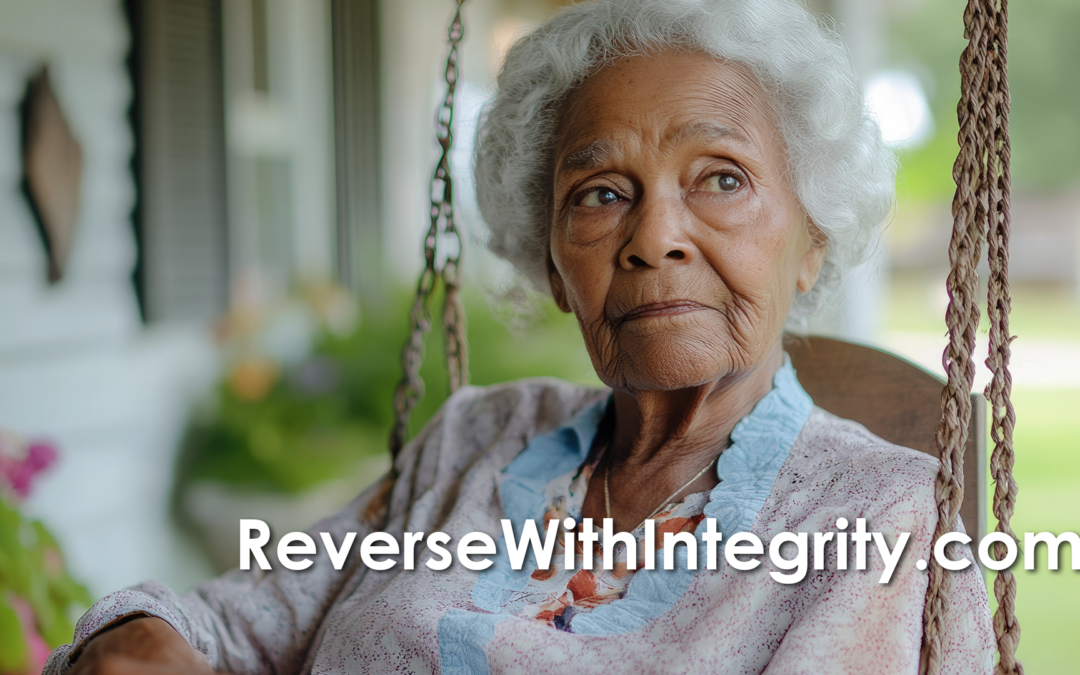
For many retirees, the biggest challenge isn’t a large financial crisis, it’s the slow and steady pressure of making a fixed income stretch far enough each month.
Recently, I had the privilege of helping a 75-year-old widow who found herself facing a situation that is becoming increasingly common among seniors.
She wasn’t looking for luxury.
She wasn’t trying to access a large sum of money.
She simply wanted to remain independent in the home she loved without having to rely on her family for financial support.
A Home Filled with Memories
For more than 30 years, she and her husband built a life together in the same home.
They raised their family there, celebrated holidays there, and created a lifetime of memories within those walls.
Years ago, her husband worked hard to pay off the mortgage. Together, they looked forward to enjoying retirement without a house payment hanging over their heads.
Then life changed.
After her husband passed away, she not only lost her partner, but she also lost a significant portion of the household income they had relied upon for years.
Suddenly, the retirement they had planned together looked very different.
The Challenge
Although she owned her home free and clear, her monthly income was no longer enough to comfortably cover her living expenses.
Every month became an exercise in careful budgeting.
She found herself coming up short by approximately $500 each month.
Like many seniors, she also struggled with another challenge that often goes unnoticed.
Property taxes and homeowners’ insurance didn’t arrive as manageable monthly expenses.
They arrived as large annual bills.
Each year, she found herself worrying about how she would come up with the money when those expenses became due.
Despite doing everything she could to budget responsibly, she often found herself relying on family members to help bridge the gap.
She was grateful for their support, but she didn’t want to be a burden.
She wanted to maintain her independence.
Looking for a Solution
When we met, she made one thing very clear:
She had no intention of ever leaving her home.
This wasn’t just a house.
It was the place where she had built her life.
It was where she felt safe.
It was where she wanted to remain.
As we discussed her goals, it became clear that she didn’t need a large lump sum of money.
What she needed was stability.
She needed enough monthly income to make her budget work and a way to eliminate the stress of coming up with taxes and insurance every year.
After reviewing her situation, we explored a Home Equity Conversion Mortgage (HECM), commonly known as a reverse mortgage.
The Solution
Using the equity she had spent decades building in her home, we were able to structure a HECM that addressed her specific needs.
The proposal provided her with a monthly distribution of $500 to supplement her retirement income.
In addition, funds were set aside to cover her future property taxes and homeowners’ insurance through a Life Expectancy Set Aside (LESA).
This meant she no longer had to worry about saving for those large annual expenses or scrambling when the bills arrived.
Most importantly, she understood exactly how the program worked.
She appreciated knowing that she would only be responsible for repaying the funds she actually borrowed over time.
There were no new monthly mortgage payments to add to her budget.
Instead, the solution was designed to support the retirement lifestyle she wanted to maintain.
The Outcome
The financial impact may not seem dramatic to some people.
After all, we’re talking about $500 per month.
But for her, it changed everything.
For the first time in years, her monthly budget worked.
She no longer had to wonder how she would cover her taxes and insurance.
She no longer felt the same level of dependence on family members for financial support.
Most importantly, she regained confidence in her future.
The constant stress that had followed her since losing her husband began to lift.
What had once felt like a monthly struggle became manageable.
And perhaps for the first time in a long time, she could start thinking about enjoying retirement instead of simply surviving it.
She even joked that with the extra breathing room in her budget; she might finally be able to take a cruise or enjoy a vacation she’d been putting off for years.
The Bigger Lesson
Many seniors believe that if they own their home free and clear, they shouldn’t have financial challenges.
The reality is that homeownership alone doesn’t pay grocery bills, utilities, healthcare costs, or rising living expenses.
For some retirees, a relatively small increase in monthly cash flow can create a tremendous improvement in quality of life.
A reverse mortgage isn’t always about accessing large amounts of money.
Sometimes it’s about creating enough stability to allow someone to remain independent, preserve their dignity, and enjoy the retirement they’ve worked so hard to achieve.
Final Thoughts
One of the most rewarding parts of my job is helping seniors discover solutions they didn’t know existed.
This widow wasn’t looking for wealth.
She wasn’t looking to leave her home.
She wasn’t looking to take on additional financial obligations.
She simply wanted enough income to comfortably live in the home she and her husband had worked so hard to pay for.
Through a carefully structured HECM, she found exactly that.
Today, she remains in the home she loves, with greater peace of mind, more financial stability, and the freedom to focus on enjoying life rather than worrying about making ends meet.
Sometimes the biggest transformations don’t come from dramatic changes.
Sometimes they come from solving a $500 problem that has been stealing someone’s peace of mind for years.